



- Home
- /
- High Courts
- /
- Bombay High Court
- /
- 'Merely Running School Is Not...
'Merely Running School Is Not Charitable Purpose': Bombay High Court Rejects Education Trust's Property-Tax Exemption Bid
Saksham Vaishya
7 Oct 2026 6:45 PM IST
The Bombay High Court has dismissed a petition filed by Jai Hind Sindhu Education Trust seeking exemption from property tax, holding that an educational institution must establish for every financial year that its buildings and lands are solely occupied and used for a public charitable purpose. The Court held that merely running an educational institution, or being a linguistic...
This is a premium content
Available exclusively to
Our subscribers
Subscribe Premium 
INR 1099+GST
Your support helps us to bring you more content at
an affordable subscription scheme !!!
All payment options available
The Bombay High Court has dismissed a petition filed by Jai Hind Sindhu Education Trust seeking exemption from property tax, holding that an educational institution must establish for every financial year that its buildings and lands are solely occupied and used for a public charitable purpose. The Court held that merely running an educational institution, or being a linguistic minority institution, does not by itself entitle a Trust to exemption under Section 132 of the Maharashtra Municipal Corporations Act, 1949.
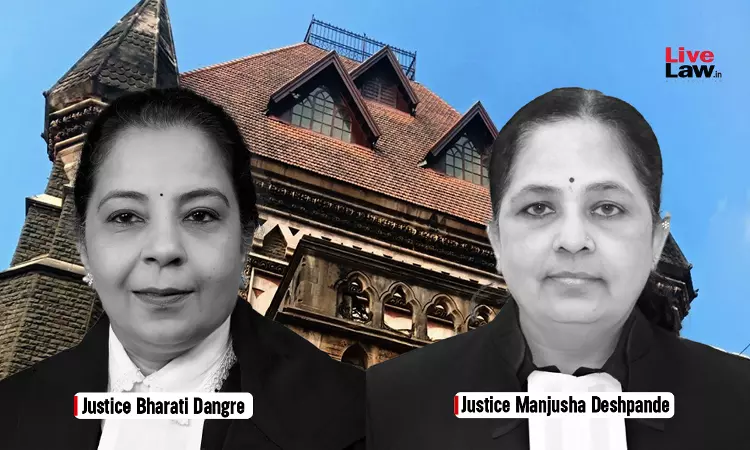
A division bench of Justice Bharati Dangre and Justice Manjusha Deshpande was hearing a petition filed by a public charitable trust, challenging property-tax demands raised by the Pimpri Chinchwad Municipal Corporation (PCMC). The Trust claimed that its sole objective is to promote, run, take over, and manage the educational interests of the institutions in Maharashtra, and hence it is exempt from property tax.
The Trust submitted that it functioned only for educational purposes on a no-profit basis and that its funds were not applied for any purpose other than education. The Respondents raised a preliminary objection as to the maintainability of the writ petition in view of an alternative and efficacious remedy in form of statutory appeal being available. It further contended that mere assertion that it is a 'charitable educational institution' with public purpose is not sufficient to claim exemption.
Referring to Municipal Corporation of Delhi Vs. Children Book Trust, which was relied upon by the Petitioner, the Court clarified that it does not lay down an absolute proposition of law that the benefit of exemption has to be extended to buildings being used for educational purposes. The Court observed that for education to fall under a charitable purpose, there must be some element of public benefit involved.
“… it must involve an element of public benefit or philanthropy and the Apex Court specifically noted that if the education is run on commercial lines, merely because it is a school, it definitely would not be entitled for availing the benefit of exemption…,” the Court noted.
The Court noted that Section 132(1)(b) exempts buildings and lands “solely occupied and used” for a public charitable purpose, while Section 132(2) excludes premises where trade or business is carried on or from which rent is derived.
The Court accepted the respondents' submission that for claiming exemption, the petitioner must establish that the buildings and lands or portions thereof are solely occupied and used for a public charitable purpose.
“… the claim is not automatic or of permanent nature, but the burden must be discharged by the person claiming exemption that the property and its user satisfied the statutory criteria. Merely by asserting that the society is established with a charitable purpose and it runs a school and therefrom impart education, and it per se do not become a charitable purpose,” the Court remarked.
The Court further held that exemption has to be sought every financial year and there can be no exemption claimed in a wholesale manner.
“… if Petitioner No.1-Trust intends to claim an exemption under Section 132, it is imperative for it to make an application seeking exemption for every financial year… merely because the Trust is running a linguistic minority institution, that by itself would entitle it to be exempted because education is one of the fields, which is considered as charitable purpose,” the Court observed.
The Court found that the Petitioners had failed to make out such a case, noting that the Trust was accepting fees and donations and was not providing free education. In the absence of a year-to-year claim for exemption, the Court found no reason to interfere with the demand and dismissed the writ petition.
Case Title: Jai Hind Sindhu Education Trust v. State of Maharashtra [Writ Petition No. 987 of 2012]
Tags