




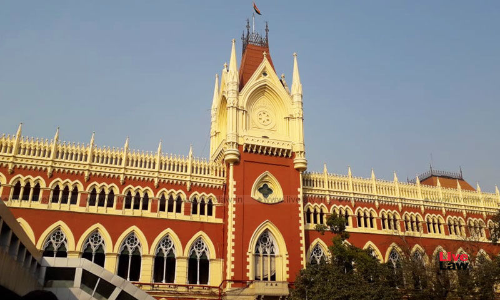
Calcutta High Court
'Not Sanctioned By Law': Calcutta High Court Awards ₹5.36 Lakh To Man Illegally Detained For 60 Days After Bail
The Calcutta High Court has held that a man was illegally detained for 60 days despite securing bail in three criminal cases and directed the West Bengal Government to pay him ₹5.36 lakh as compensation for the unlawful detention, loss of employment and mental agony. A Division Bench of Justice Debangsu Basak and Justice Aryak Dutt held that the detention of Joy Krishna Nag alias Joy Kumar...

'Biological Identity' Of Children Must Be Ascertained: Calcutta High Court Orders DNA Tests In Alleged Baby-Swap Case
The Calcutta High Court has directed repeat DNA testing of two young children after a woman alleged that her newborn daughter was swapped with another baby at a Durgapur hospital, observing that the case involved not merely a criminal investigation but the children's right to know their biological identity.Justice Kausik Chanda, in an order passed on October 5, directed the petitioner,...

'State Must Take Precaution': Calcutta High Court In Abhishek Banerjee's Plea For Restoring Z+ Security, Flags Stone Pelting Incidents
The Calcutta High Court on Tuesday questioned the West Bengal government's decision to downgrade Trinamool Congress leader Abhishek Banerjee's security cover from Z+ to X category, observing that the State had failed to produce any documents showing the considerations taken into account before reducing his security.Justice Krishna Rao noted that although the decision to downgrade...

Cannot Freeze Entire Account Over ₹2K Disputed Transaction: Calcutta High Court Directs Axis Bank To Unfreeze Account
The Calcutta High Court has directed Axis Bank to immediately unfreeze a businessman's entire bank account, observing that there was no justification for freezing the account when the disputed amount in question was only ₹2,253.Justice Rishad Medora was hearing a writ petition filed by Sohel Molla, a small-time businessman operating a proprietorship under the name “ROHAN...
Calcutta High Court Allows Kidney Donation By Driver's Wife To Employer, Says Non-Relative Donation Permissible
The Calcutta High Court has set aside the decision of the State Level Authorization Committee refusing permission for a kidney transplant involving an unrelated donor, holding that the rejection was not in accordance with the statutory framework when there was no material indicating any commercial transaction or involvement of a middleman.Justice Krishna Rao was hearing a petition filed...

'Playing With People': Calcutta High Court Raps Bilaspur FRO's Move To Decide Citizenship During Pendency Of SIR Appeal
The Calcutta High Court has questioned the Foreigners Registration Officer (FRO), who is also the Superintendent of Police, Bilaspur, over the authority's move to determine the citizenship of four men from Murshidabad while their appeals against deletion of their names from the electoral roll during the Special Intensive Revision (SIR) are pending before the appellate tribunal.Justice Krishna...

Delay In Submitting Medical Certificate Not Grounds To Reject Genuine Illness Claim: Calcutta High Court Grants Relief To Law Student
The Calcutta High Court has directed St Xavier's University, Kolkata to allow a B.Com LLB student to clear her semester and proceed to subsequent semesters despite an attendance shortage, holding that delay in submitting a medical certificate cannot be treated as fatal where the student had genuinely suffered an illness.Justice Jay Sengupta observed that the existence of a medical...
Unzipping Pants, Telling Woman 'I Will Make You Pregnant' Outrages Modesty: Calcutta High Court Upholds 6-Month Jail For Man
The Calcutta High Court has upheld the conviction of a Kolkata man under Section 509 of the IPC for making vulgar sexual remarks and obscene gestures towards a woman, including unzipping his pants and telling her, “Mere ko ek chance do, tumko pregnant kardenge” (Give me a chance, I will make you pregnant).Justice Uday Kumar dismissed the criminal revision petition filed by Raj Kumar Jaiswal...

'No Public View': Calcutta High Court Quashes Cruelty Case Against Husband, In-Laws Over Wife's Allegations Of Caste Abuse
The Calcutta High Court has quashed criminal proceedings under the SC/ST Act against five persons, including a husband and his family members, observing that there was no material in the FIR, charge sheet or case diary to establish that the complainant was abused or insulted on the basis of her caste in a place within public view.Justice Shampa Dutt (Paul) quashed proceedings arising from...
Litigant Cannot Use Contempt Proceedings To Challenge Judicial Order Or Attack Judge: Calcutta High Court
The Calcutta High Court has dismissed a criminal contempt petition filed against a Judicial Officer of the Andaman and Nicobar Islands, observing that a litigant cannot use contempt proceedings to challenge a judicial order or make personal allegations against the Judge who passed it.The Circuit Bench at Port Blair comprising Justice Prasenjit Biswas held that an aggrieved litigant must...

Bengal Panchayat Bodies Can Auction Ferry Ghats; Hereditary Boatmen's Societies Have No Automatic Preference: Calcutta High Court
The Calcutta High Court has held that Panchayat Samitis are empowered to auction ferry ghats vested in them and that the preference available to local boatmen's cooperative societies and hereditary Patnis under the West Bengal Land and Land Reforms Manual does not override the powers of Panchayat bodies to conduct e-auctions.A Division Bench of Justice Shampa Sarkar and Justice Arjun...
ED Need Not Seek Court Permission For Further Probe In PMLA Case Before Trial: Calcutta High Court
The Calcutta High Court has held that the Enforcement Directorate can conduct further investigation in a money laundering case even after filing a prosecution complaint, ruling that prior permission of the trial court is not required where the trial has not yet commenced.Justice Krishna Rao dismissed a writ petition filed by Mahesh Kumar Kejriwal, who had challenged notices issued by the ED...