




Articles
Cost Of Supreme Court's 2-Year-Plus Delay In Deciding CEC Appointment Case
The petitions challenging the CEC Act have remained pending since January 2024. Gyanesh Kumar was the first CEC to be appointed as per this law.
Section 20C Of Specific Relief Act: Forgotten Mandate For Speedy Civil Justice
There is a familiar paradox in civil litigation: a party may establish a substantive right, obtain a decree after years of litigation, and yet find that the relief has lost much of its practical value by the time it arrives. This paradox becomes particularly acute in suits for specific relief. Contracts concern commercial arrangements, immovable property, development projects, business transactions and obligations whose value is often time-sensitive. A remedy which comes after prolonged...

Masterpiece Of Empathy And Courage: Karthik Subbaraj's Dorothy Redefines Tamil Cinema
When I stepped into the theatre to watch Karthik Subbaraj's Dorothy with my family which is a rare theatrical outing for me, I expected a good movie. What I walked out with, however, was a heart full of hope, tears in my eyes, and the deep belief that Indian cinema had just witnessed a historic moment.The title itself caught my attention. In Greek, Dorothy means "the gift of God." But history reveals another beautiful meaning: during the mid-20th century, the phrase "Are you a friend of...
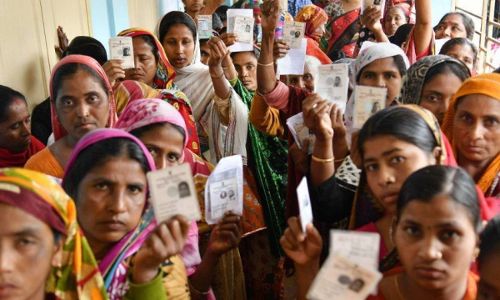
Gandhiji's Oceanic Circle, Inverted
"Independence must begin at the bottom. Thus every village will be a republic or panchayat having full powers." Gandhiji, Harijan, 28 July 1946Gandhiji wrote those lines thirteen months before freedom arrived. When it came, it came from the top, through a transfer of power negotiated in Delhi and London.This week marks his 157th birth anniversary. The rituals are familiar: garlands at Rajghat, a cleanliness drive, his spectacles on a poster. What gets far less attention is the idea he held to...
After Rejanish KV V. K Deepa: Is it Time To Reconsider 25% LDCE Quota For Higher Judicial Service?
October 9 marks one year since the Rejanish K.V. v. K. Deepa (2025 LiveLaw (SC) 989) judgment, in which a five-judge Constitution Bench held that in-service judicial officers having seven years' combined experience as an advocate and/or judicial officer can appear in the direct recruitment exam for District Judge/Additional District Judge posts. It also prescribed a minimum age of 35 years for both advocates and judicial officers participating in direct recruitment. The Court also held that...

Kaziranga Mining Issue: Contours Of CEC Advisory Role
The Central Empowered Committee (CEC), a Supreme Court constituted panel for monitoring environmental compliance, has again raised concerns over mining activities near Kaziranga National Park. It pulled up the Assam government for not having a wildlife management plan in place.The committee called out the government's inaction on the mining issue around the Parkup Pahar range, a wildlife sanctuary, and questioned the grant of mining leases around areas forming part of the Karbi Anglong Elephant...

Missing Deadline Behind Punjab's Chief Justice Dispute
The appointment of Justice Ashwani Kumar Mishra as Chief Justice of the Punjab and Haryana High Court, notified on 5 September 2026, has drawn an unusually public objection from the State of Punjab, whose Cabinet resolved the next day that the appointment had been made without the State's consent. The real question, however, is not whether Punjab's consent was required, for it plainly was not. It is whether a State that has been asked for its views, and has not given them, can be said to have...
SIR, Please Reconsider Sir!
The speculations are rife on the endgame Election Commission (EC) intends through ongoing Special Intensive Revision (SIR) of electoral rolls. The stance of EC on shocking reports of internal rift do not mean much as its focus remains on maximum exclusions from existing voters list. SIR continues on legal architect of three dubious fundamentals. One, the shift of burden on existing voter to prove credentials in 'legacy year' 2002. Second, the choice of questionable documents for existing voters...
Two Working Days: Code On Wages And Employee's Final Settlement
An employee resigns, serves the notice period and hands over the laptop on the last working day. HR says the full and final settlement will be processed in 45 to 60 days, once IT, finance and the reporting manager have given exit clearance. When the statement arrives, it shows a deduction for the part of the notice period that was not served, a recovery of the joining bonus and nothing against leave encashment. The employee is asked to sign a no-dues declaration before anything is paid.For most...
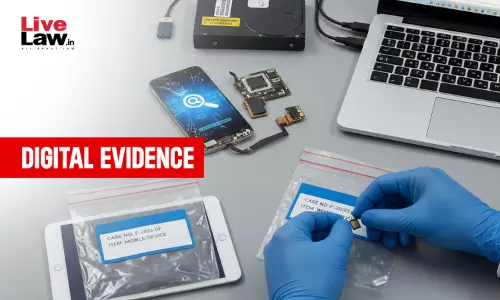
How Bharatiya Sakshya Adhiniyam Has Transformed Digital Evidence
Though the new criminal laws are mostly dismissed as a mere renaming of colonial statute in indigenous nomenclature , the Bharatiya Sakshya Adhiniyam, 2023 (BSA), has significantly altered how the “certificate” that authenticates an electronic record is considered in the field of electronic evidence. Section 63 of the BSA, which has replaced the highly contentious section 65B of the Indian Evidence Act, 1872 (IEA), preserves the structure of the old law while tightening nearly every bolt within...

Corporate Fraud And Criminal Prosecution
Corporate fraud has emerged as one of the significant issues in the recent times. It refers to the dishonest or deceptive conduct carried out by a person with the intention of causing injury or damage to the shareholders, creditors or any other person or securing any undue advantage to himself by such practice. Company act comprehensive deals with corporate fraud as it is not merely limited to internal affairs of the company rather the consequences of corporate fraud extend far beyond the...

“Delete for Everyone” As Revocation: WhatsApp Offers And Recoverable Messages In Light Of Indian Contract Act
WhatsApp has become a common medium through which people make offers, communicate acceptances, and enter into contracts. But what happens when a WhatsApp message containing an offer is deleted before it is read and is later recovered by the recipient? Nowadays, at the click of a button, deleted WhatsApp messages can easily be recovered with the help of WhatsApp message-recovery applications readily available on the Play Store, such as WAMR. With such applications, even if a message has been...