



- Home
- /
- High Courts
- /
- Delhi High Court
- /
- Maintenance Can't Be Frustrated...
Maintenance Can't Be Frustrated Merely Because Husband Is Absconding, Courts Must Take Steps To Trace Him: Delhi High Court
Nupur Thapliyal
7 Oct 2026 2:25 PM IST
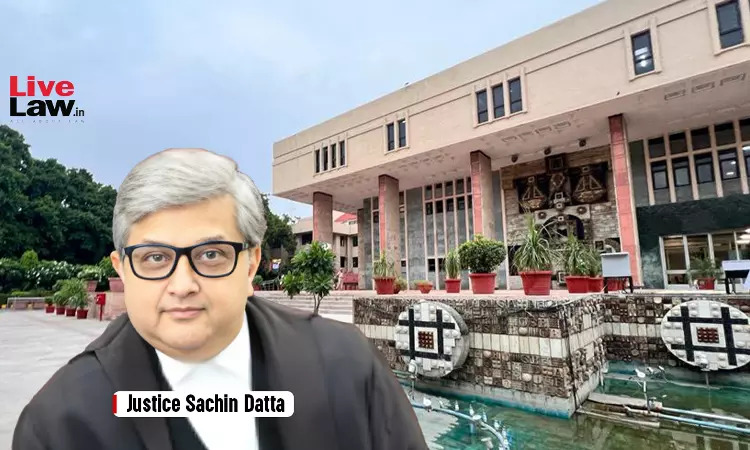
The Delhi High Court has held that an absconding husband, being the judgment debtor, cannot be permitted to frustrate a maintenance order by evading the process of the Court.Justice Sachin Datta observed that the fact that the husband's whereabouts are unknown is no ground to close or dismiss execution proceedings.The Court observed that a maintenance order is a measure of social justice and...
This is a premium content
Available exclusively to
Our subscribers
Subscribe Premium 
INR 1099+GST
Your support helps us to bring you more content at
an affordable subscription scheme !!!
All payment options available
The Delhi High Court has held that an absconding husband, being the judgment debtor, cannot be permitted to frustrate a maintenance order by evading the process of the Court.
Justice Sachin Datta observed that the fact that the husband's whereabouts are unknown is no ground to close or dismiss execution proceedings.
The Court observed that a maintenance order is a measure of social justice and that the obligation to render such an order effective rests upon the Court.
It held that where a judgment debtor evades the judicial process, the executing court must resort to the coercive measures available in law instead of permitting the execution proceedings to come to an end.
“To permit the execution to be closed on that ground would be to allow the defaulter to convert his own default into a defence, and take advantage of his own wrong,” the Court held.
Justice Datta further observed that the liability to pay maintenance is a continuing one and does not lapse merely because a particular round of execution proceedings has failed.
“…the liability under an order of maintenance is a continuing one, and is discharged only by actual payment, and not by the taking, or the failure, of any coercive step against the defaulter,” the Court said.
The Court was dealing with a plea filed by a woman and her minor daughter after their maintenance execution proceedings were dismissed by the Family Court on the ground that they had failed to provide the fresh address or whereabouts of the husband.
The petitioners were awarded interim maintenance of Rs. 4,000 per month each, totalling Rs. 8,000 per month, from November 26, 2019, along with litigation expenses of Rs. 11,000. The order had attained finality.
The execution proceedings were subsequently dismissed for non-prosecution on February 05, after the petitioners could not furnish the husband's current whereabouts.
The Court observed that a deserted spouse or minor child ordinarily does not possess the means or machinery to trace a person who does not wish to be found, whereas the State possesses such machinery.
“An order of maintenance is not a private debt to be realised by the unaided efforts of the claimant,” the Court said, adding that placing the burden of locating an absconding husband on a deserted wife would invert the scheme of maintenance law.
It further said that the executing court is not confined to the address furnished by the decree holder but it can also direct police assistance, require the judgment debtor to disclose his assets, summon records from his employer, banks and other relevant sources, and resort to statutory modes of enforcement.
“….an execution petition which is dismissed without the executing court having exhausted the processes available to it is not, in substance, a judicial disposal of the execution, and such an order is liable to be set aside and the execution restored,” the Court said.
It added: “…the dismissal of an execution petition in such circumstances, with liberty to file afresh, is no substitute for its continuation, since it exposes the decree holder to avoidable objections, including under the first proviso to Section 125(3) of the Cr.P.C., and rewards the very conduct which occasioned the delay.”
Allowing the plea, Justice Datta set aside the Family Court's order and restored the execution proceedings to their original number.
The Family Court has been directed to take effective steps to trace and serve the husband, including through appropriate police assistance from the concerned SHO.
“The concerned Family Court is directed to take effective steps to trace and serve the judgment debtor, including by way of appropriate police assistance from the SHO, PS Shakarpur, who shall file a status report of the steps taken, and to conduct enquiries concerning the residence, employment and assets of the judgment debtor,” the Court ordered.

Nupur Thapliyal
Nupur Thapliyal is a Principal Correspondent with LiveLaw, based in New Delhi. She reports from the Delhi High Court and trial courts in the national capital

