


- Home
- /
- High Courts
- /
- Kerala High Court
- /
- Kerala High Court Grants Relief To...
Kerala High Court Grants Relief To Headmistress Denied Entry For Wearing Churidar Instead Of Saree, Says 'Dress Choice A Fundamental Right'
K. Salma Jennath
7 Oct 2026 3:22 PM IST
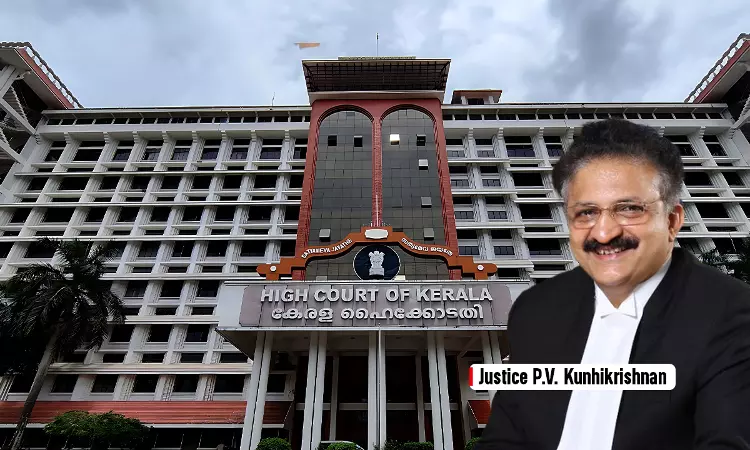
The Kerala High Court recently ordered police protection after the manager of a school obstructed the headmistress' entry for wearing churidar instead of saree. [2026 LiveLaw (Ker) 560]Justice P.V. Kunhikrishnan also declared that a citizen's choice of attire is a part of fundamental right: “What dress one wears is ordinarily a matter of personal choice of every citizen of this country. No...
This is a premium content
Available exclusively to
Our subscribers
Subscribe Premium 
INR 1099+GST
Your support helps us to bring you more content at
an affordable subscription scheme !!!
All payment options available
The Kerala High Court recently ordered police protection after the manager of a school obstructed the headmistress' entry for wearing churidar instead of saree. [2026 LiveLaw (Ker) 560]
Justice P.V. Kunhikrishnan also declared that a citizen's choice of attire is a part of fundamental right:
“What dress one wears is ordinarily a matter of personal choice of every citizen of this country. No one or society as a whole can dictate how a citizen should dress without the backing of the law. This is a part of the fundamental rights of every citizen…I declare that a citizen's attire is his/her choice, and nobody can insist that it conform to society's customs, nor can anybody dictate that it be in a manner acceptable to society, especially when no law backs it. These are individual choices of the citizen. If any such dictate is made, it is the duty of the law-enforcing authority to take appropriate steps in accordance with law forthwith.”
The Court was considering a writ petition filed by the headmistress of Eeswara Vilasom High School, Kottarakkar seeking a direction to the General Education Department Secretary to disqualify the Manager, who obstructed her. She also sought for a direction to the police to grant her protection while entering the school during the remainder of her tenure.
The petitioner stated that the Manager/6th respondent entered into her officer and threatened her by saying that she must not wear churidar and only saree to school. She also alleged that he called the security personnel in front of her and told him not to allow her inside the school wearing churidar.
The headmistress further stated that on February 2 when she came to school, the security stopped her and denied entry inside because she was wearing a churidar. Following this, she complained to the jurisdictional SHO, who helped her to enter the school premises. She also filed a complaint, leading to an FIR against the respondent manager.
The petitioner pointed out that as per the circular dated 20.11.2015 regarding dress code for teachers issued by the Director of General Education, there is no bar against wearing churidar. Moreover, the respondent manager is in the habit of using threat of physical violence against the staff and he has also been previously convicted under Sections 294(b) and 354 IPC based on a female staff member's complaint, it was stated.
The government pleader submitted that District Educational Officer visited the school after the above incident and conducted enquiry. He also gave a prima facie report to the Deputy Director of Education to take disciplinary against the respondent manager and the same is presently pending, it was added.
The 6th respondent manager also entered appearance and denied all the allegations. He also stated that there are several instances of dereliction of duty on the part of the petitioner headmistress and it was to cover up these that she is making up the allegations.
After hearing the parties, the Court observed:
“At first blush, the dispute appears to be a simple question of attire: whether a Headmistress of a school can attend school during working hours wearing a churidar rather than a saree. But I believe that this apparently narrow question raises a matter of deeper constitutional and institutional significance. The case concerns the dignity, autonomy and professional standing of an educated woman and the permissible limits of managerial authority over her personal choice of dress. A saree may be a graceful and respectful form of attire to one individual. Yet its dignity cannot be converted into a compulsory uniform by force of individual preference. Similarly, a churidar, when worn decently and appropriately in a professional setting, does not diminish the competence, decorum or authority of the Headmistress.”
The Court also noted that the circular referred by the petitioner permits churidar for teachers and therefore, the manager cannot impose his personal will upon the petitioner. It added:
“Clothes may express culture, comfort and individual choice. However, they cannot ordinarily become a measure of a person's worth or dignity. This case is not a contest between a saree and a churidar. The Court must decide whether a Manager can turn his personal notion into a binding command. The Constitution does not make a woman's dignity contingent on her conformity with another person's preferred mode of attire. Dress is a personal choice. No one can restrict it, and no one can dictate which dress an individual must wear. The dignity and cultural tradition of an attire should be decided by the person concerned, not by society. Therefore, I am of the considered opinion that no one can dictate that a person should wear a particular attire unless there is backing of law in connection with the dress code of an institution or other establishment.”
Noting that disciplinary enquiry is pending against the respondent manager, the Court refused to make any orders in that regard. However, the Court ordered the SHO to ensure that the petitioner enters the school premises freely without obstruction from the manager or anyone else during the remainder of her service.
It thus disposed of the plea.
Counsel for the petitioner: Syam J. Sam, Daniel Mathews Koshy
Counsel for the respondents: V.A. Muhammed, M. Sajjad, Shahina Hameed – Government Pleader
Tags
K. Salma Jennath
Salma Jennath is a Principal Correspondent with LiveLaw, covering Kerala High Court

