



- Home
- /
- High Courts
- /
- Madras High Court
- /
- Sympathy Can't Replace Proof Of...
Sympathy Can't Replace Proof Of Negligence: Madras High Court Reduces Compensation To Woman For Failed Tubectomy
Upasana Sajeev
7 Oct 2026 3:40 PM IST
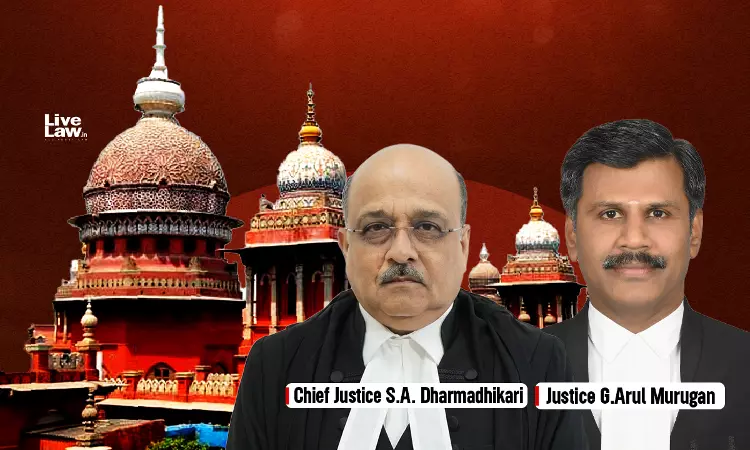
The Madras High Court recently set aside an order granting Rs 3 Lakh compensation to a woman who underwent fourth pregnancy as a result of a failed tubectomy. [2026 LiveLaw (Mad) 486] The bench of Chief Justice SA Dharmadhikari and Justice G Arul Murugan observed that the risk of failure of tubectomy was a medically recognised fact and even as per the Standards and Quality...
This is a premium content
Available exclusively to
Our subscribers
Subscribe Premium 
INR 1099+GST
Your support helps us to bring you more content at
an affordable subscription scheme !!!
All payment options available
The Madras High Court recently set aside an order granting Rs 3 Lakh compensation to a woman who underwent fourth pregnancy as a result of a failed tubectomy. [2026 LiveLaw (Mad) 486]
The bench of Chief Justice SA Dharmadhikari and Justice G Arul Murugan observed that the risk of failure of tubectomy was a medically recognised fact and even as per the Standards and Quality Assurance in Sterilization Services, about 5 in 1000 sterilizations carried a small risk of failure. The court added that whether there was medical negligence or not had to be tested based on evidence, and a writ court could not decide such issues while exercising jurisdiction under Article 226 of the Constitution.
“The aforesaid factual pleas cannot be settled on affidavits. They need the evidence of the doctor, the hospital records, and probably expert medical opinion. They need cross-examination. A writ court is, in our firm opinion, not equipped to undertake such roving inquiry,” the court said.
“The sympathy the learned Single Judge felt for the respondent herein is understandable. She lost her husband and is raising her children alone. However, sympathy cannot stand in for proof of negligence. The directions of the learned Single Judge cannot be sustained,” the court added.
set aside the order, the court noted that the woman was not without a remedy as the Government had issued a GO by which the Government fixed compensation when a sterilisation failed. The court noted that as per the GO, the State and the Centre paid Rs 30,000 each to sterilisation acceptors. The court thus held that the woman could approach the competent civil court and claim the compensation as provided under the GO.
The court also added that if the woman believed that she was entitled to more compensation, she was at liberty to approach the civil court, alleging negligence on the part of the doctor or hospital, as only then could both parties give evidence.
“If the respondent herein believes she has a claim for more, because of negligence on the part of the doctor or the hospital, she must prove it before a civil court, where both sides can lead evidence. We make it clear that we have not examined, and express no opinion on, whether there was any negligence,” the court said.
The court was hearing an appeal filed by the Secretary to Government, Health Department and others, challenging an order of a single judge, directing the Dean, Arcot Government Hospital to pat Rs 3 lakh compensation to the woman. The single judge had also directed the government hospital to give free education to the fourth child and to bear the cost of books, stationery, uniforms and other school expenses.
As per the facts, the woman and her husband had gotten married in 2012 and had two daughters and a son. In 2018, the woman underwent a puerperal sterilisation by tubectomy at the Government Hospital. However, in 2021, she conceived again, and a girl child was born. In 2023, the husband passed away.
The woman had argued that the fourth pregnancy was due to the failure of the first surgery and that the hospital was negligent. Though she sent a representation seeking negligence, no action was taken, and thus she approached the court.
The single judge, while awarding compensation, noted that since the woman became pregnant even after surgery, the general presumption would be that there were lapses in surgery. The single judge also noted that the state's argument that failure may occur in 5 out of 1000 surgeries was generic.
The State argued that negligence was a question of fact, which could be established only by way of evidence on trial and the court could not decide the same in a writ petition under Article 226 of the Constitution.
The court agreed and noted that such questions of fact had to be necessarily decided by letting in evidence at the time of trial. The court was thus inclined to interfere with the order of the single judge and set aside the same. However, the court also clarified that the woman would be at liberty to approach the civil court for medical negligence and could also claim compensation through the Government Order.
Counsel for Appellant: Mr C A Ramanan, Government Advocate
Counsel for Respondent: Ms. J. Manthagini for Mr. R. Sunil Kumar
Tags

Upasana Sajeev
Upasana Sajeev is a Principal Correspondent with LiveLaw, covering Madras High Court

