



Supreme Court
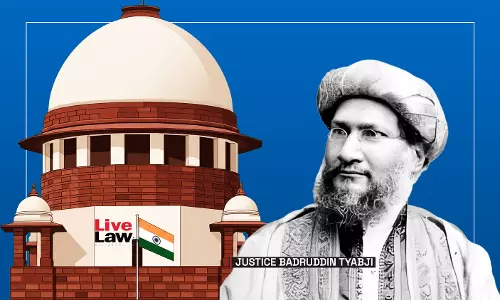
'Go And Tell The Chief Justice To Mind His Own Business': When A Judge Allowed Sons To Appear Before Him
The Supreme Court traced the evolving law of bias and recalled that kinship was not regarded as a ground for bias at one point in time.
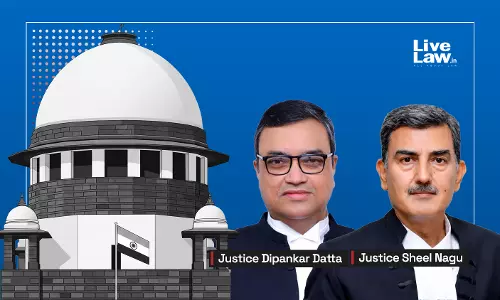
Constructive Res Judicata | Claim Based On Subsequent Cause Of Action Not Barred By Judgment On Prior Cause Of Action : Supreme Court
The Supreme Court on Wednesday (November 18) held that the principle of constructive res judicata cannot bar a subsequent claim merely because a relief was not sought in earlier proceedings, where the cause of action for such relief had not arisen when the original proceedings were instituted. A bench of Justice Dipankar Datta and Justice Sheel Nagu heard the case concerning a retired...
Inquiry Vitiated If Complainant's Close Relative Sits In Committee, Proof Of Actual Bias Not Required: Supreme Court
The test is not whether actual bias is proved, but whether there exists a 'reasonable likelihood of bias' or 'real possibility of bias', the Courtheld.
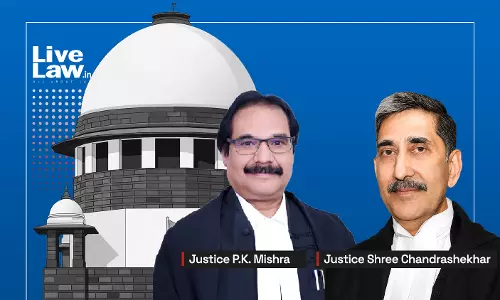
Supreme Court Upholds Introduction Of Written Exam Midway Through Recruitment, Says It Ensures Objective Assessment
The Supreme Court has upheld the introduction of a written examination midway through the recruitment process for 46 Excise Constable posts in Nagaland, observing that an objective written test provides a common basis for assessing candidates and avoids placing disproportionate reliance on the comparatively subjective assessment involved in a viva-voce.A Bench of Justice Prashant Kumar Mishra...

Past Misconduct May Be Relevant To Decide Penalty For Subsequent Misconduct, But Cannot Fill Gaps In Fresh Charges: Supreme Court
The Supreme Court has held that previous misconduct for which an employee has already been punished cannot, by itself, be treated as a fresh instance of misconduct to impose another penalty. It clarified that an employee's past service record may be considered while determining punishment for subsequent misconduct independently established, but cannot be used to compensate for deficiencies...

“Grossly Disproportionate”: Supreme Court Reinstates CRPF Constable Removed For 99-Day Overstay Of Leave
The Supreme Court on Monday (November 16) set aside the removal from service of a Central Reserve Police Force (CRPF) Constable who had overstayed his leave by 99 days, holding that the penalty of removal was “grossly disproportionate” and that the rejection of his medical documents rested on conjectures and surmises.A bench of Justice Satish Chandra Sharma and Justice Nongmeikapam...
Gratuity Can't Be Withheld Because Of Pending Appeal Against Acquittal: Supreme Court
The Supreme Court on Monday (November 16) held that gratuity of retired employees who were acquitted in a corruption case cannot be withheld merely because the State government's challenge to the acquittal is pending.A bench of Justice Prashant Kumar Mishra and Justice Shree Chandrashekhar observed so while dismissing the appeals filed by the Delhi Development Authority (DDA) against a Delhi...
Compulsory Retirement Order Not Punitive Or Stigmatic, So No Hearing Of Employee Needed : Supreme Court
The Court further held that an order of compulsory retirement cannot be challenged by contending that another similarly placed officer was not subjected to same action.

Woman Rejected For UP Constable Post Over Squint Eye; Supreme Court Directs Appointment After Medical Board Finds Vision Normal
The Supreme Court has directed the Uttar Pradesh govt. to issue an appointment order to a woman candidate for the post of Constable Civil Police, who was denied appointment on the ground of an alleged squint eye, despite a medical certificate certifying her vision as proper and normal. The appellant was issued a call letter for Document Verification (DV) and Physical Standard Test (PST)...
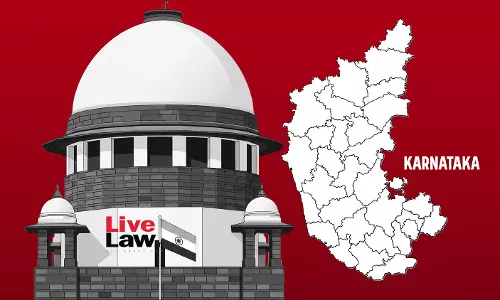
'Legislature Cannot Directly Annul Judgment' : Supreme Court Strikes Down 2022 Karnataka Law Validating Tainted 2011 Civil Service Selection
The Court directed the State Government to initiate fresh recruitment for the vacant Group A and Group B posts, granting a one-time age relaxation to candidates from the 2011 recruitment.

Ambiguity In Recruitment Criteria To Be Construed In Candidate's Favour: Supreme Court
The Supreme Court has held that ambiguity or vagueness in eligibility criteria prescribed in a recruitment advertisement should be construed in favour of a candidate who prima facie possesses the requisite qualifications. “…any ambiguity or vagueness in the prescribed qualification should be construed to the benefit of the candidate who prima facie appears to possess the...